There are many factors for the damage of threaded fasteners, but in most cases, because of looseness:
When the threaded fastener is loose, it will produce huge kinetic energy MV2, which directly affects the fastener and equipment, causing the damage of the fastener. Stud manufacturer stud is a kind of fastener with high strength and rigidity. Stud is the abbreviation of cheese head studies for arc stud welding. The specification of stud is nominal diameter Ф 10~ Ф The total length before welding is 40-300 mm. The welding pin has the identification mark of the manufacturer on the top surface of the head, so it is widely used. Steel structure bolt manufacturer steel structure bolt is a kind of high strength bolt, is also a kind of standard parts. The fastening performance is better. It is used in steel structure and engineering to make the fastening effect more effective. In general, the steel structure bolts are required to be above grade 8.8, grade 10.9 and grade 12.9, all of which are high-strength steel structure bolts. Sometimes, the bolts on the steel structure do not need electroplating, so it is OK to use the natural color. After the fastener is damaged, the equipment can not work normally, further leading to equipment damage.
The wire is broken, the bolt is broken.
The bolt is cut off and the bolt hole is broken into a circle by the fastener under radial force.
At present, the most advanced and effective method is to tighten the screw.
Down thread has the characteristics of left and right rotation. It can be matched with left-hand thread and right-hand thread.
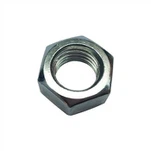
The nuts are screwed to the coupling of two different ones. The workpiece support surface is called a nut fastening nut, and the nut support surface is called a non locking nut. When using the first fastening nut preload, then lock the nut preload.
In the event of vibration and impact, the fastening nut will loosen. However, since the loosening direction of the fastening nut is the tightening direction of the lock nut, the tightening of the lock nut can only prevent the loosening of the fastening nut, resulting in the failure of the fastening nut to loosen.